Media Urged to Champion Ethical Reporting on Family Law and Access to Justice
-
by
 Comms Team
 Comms Team
Nairobi, June 12, 2026 – Journalists and editors from television, radio, print, and digital media have been challenged to strengthen ethical and accurate reporting on family law matters to enhance public understanding of rights and improve access to justice for vulnerable groups, particularly women and children.
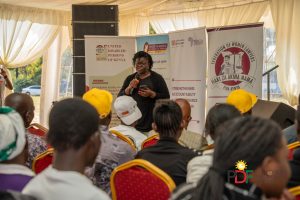
The call was made during a media capacity-building workshop on family law organised by the the United Nations Entity for Gender Equality and the Empowerment of Women (UN Women) in partnership with FIDA-Kenya and African Woman and Child Feature Centre in Nairobi.
In her remarks, FIDA-Kenya Executive Director Sophie Kaibiria underscored the media’s critical role in advancing justice and safeguarding rights. She emphasised the importance of collaboration between journalists and civil society organisations, especially as the country approaches the 2027 General Election.
Ms. Kaibiria said FIDA-Kenya remains committed to supporting journalists with accurate and verifiable information to strengthen public discourse and ensure responsible reporting on legal and human rights issues.
“Journalists can always count on FIDA-Kenya whenever they need credible legal information and clarification on matters affecting women, children and families,” she said.
The workshop, held in Nairobi, focused on enhancing media capacity to report on family law issues, including marriage, matrimonial property, succession, child custody, maintenance and burial disputes.
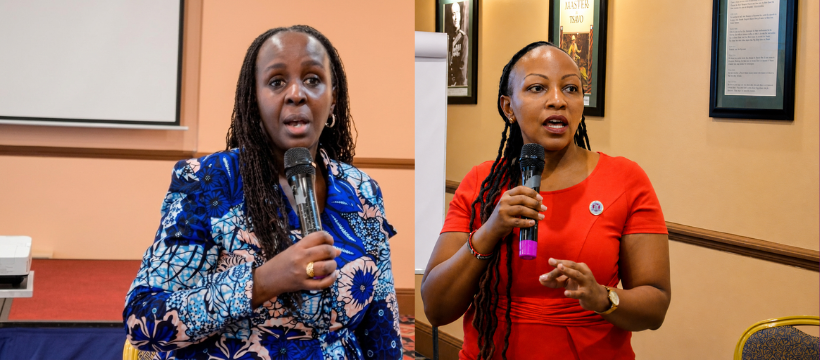
Facilitated by FIDA-Kenya Senior Legal Counsel Brenda Yambo and FIDA-Kenya member, Leah Kiguatha, the training highlighted the media’s role in shaping public understanding of legal rights, influencing attitudes toward women and children, promoting access to justice, and holding institutions accountable.
The facilitators noted that many disputes commonly reported in the media – including inheritance battles, matrimonial property claims, child custody cases, maintenance disputes and burial conflicts – often stem from questions regarding the existence and recognition of legal relationships.
Participants were taken through key legal frameworks governing family matters in Kenya, including the Constitution of Kenya 2010, the Marriage Act 2014, the Matrimonial Property Act 2013, the Children Act 2022, the Law of Succession Act and the Protection Against Domestic Violence Act.
A major focus of the training was ethical reporting. Journalists were urged to protect the identities of children, survivors of gender-based violence and vulnerable family members involved in disputes. They were also encouraged to verify information through court records and official sources, distinguish allegations from court findings, and avoid sensational headlines that may distort public understanding of legal processes.
The facilitators stressed that family disputes should not be treated as entertainment but as legal matters with significant consequences for the rights and welfare of affected individuals.
The workshop also sought to address common misconceptions surrounding marriage and family law. Participants learned that while cohabitation is not a legally recognised form of marriage under Kenyan law, courts may, depending on the evidence, recognise rights arising from long-term cohabitation. They were also reminded that customary marriages are legally recognised and that marriage registration helps protect property, inheritance and spousal rights.
In matrimonial property cases, the training emphasised that courts do not automatically divide property equally after separation or divorce. Instead, property is distributed based on proven financial and non-financial contributions, including unpaid domestic work, childcare and support for family enterprises.
Journalists were encouraged to move away from “winner versus loser” narratives and instead focus on explaining the legal principles guiding court decisions.
The workshop further highlighted the rights of widows, children and dependants under succession law. Facilitators warned that harmful cultural practices that exclude women and girls from inheritance are unconstitutional and contrary to the Law of Succession Act.
Participants were also trained on reporting child custody and maintenance disputes, with emphasis placed on the principle that the best interests of the child must remain the primary consideration in all decisions affecting children.
Regarding burial disputes, the facilitators explained that courts generally prioritise legal authority over the estate, the deceased’s wishes, and the rights of surviving spouses over cultural claims by extended family members.
The workshop concluded with a call for journalists to adopt survivor-centred, rights-based and legally informed reporting approaches. Participants were reminded that ethical reporting should protect dignity, uphold justice and contribute to a better-informed society.
The training forms part of ongoing efforts by FIDA-Kenya and UN Women to strengthen media engagement in promoting gender justice, human rights and access to justice for all.